Dual Plate Check Valve
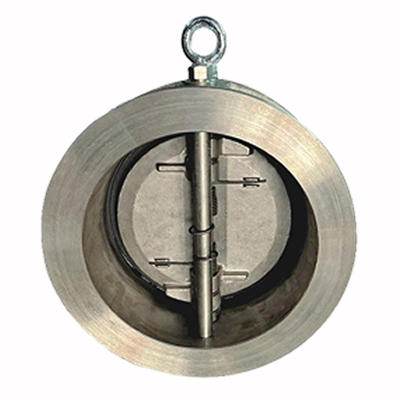
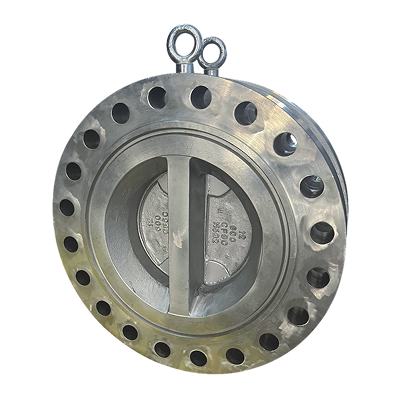
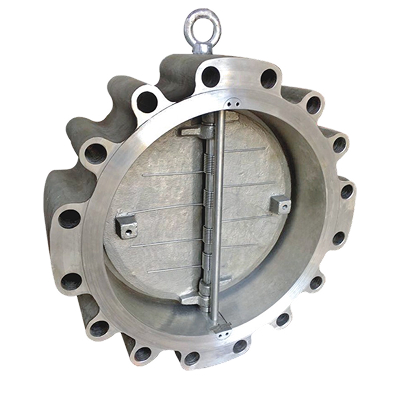
The dual plate check valve that used to prevent backflow in a piping system. It is also known as a non-return valve or NRV. A dual plate check valve is basically a one-way valve, in which the flow can run freely one way, but if the flow returns the valve will close to protect the piping, other valves, pumps etc. If the flow returns and no check valve is installed, water hammer can occur. Water hammer often occurs with an extreme force and will easily damage a pipeline or components.
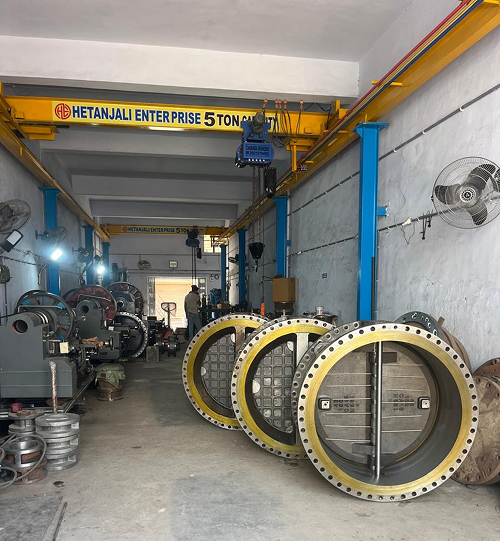
Why Dual Plate Check Valve over Swing Check Valve
The inherent design of the dual plate check valve results in significantly reduced weight when compared to conventional full-bodied swing check valves. As valves increase in size the dual plate check valves can be as little as one fifth the weight of the equivalent full-bodied unit. This results in savings in initial cost, space and pipe support element installation. To minimize or eliminate line shock, check valves must close as quickly as possible prior to the flow having an opportunity to reverse. As each of the discs in dual plate check valves are only half the size of that of a full-bodied check, they experience reduced fluid drag and can move more quickly to the closed position. Their swing radius is one half that of the conventional check valves. The leading-edge distance from open to closed position is halved, in turn reducing the travel time by 50%. The reduced weight of a dual plate valve disc versus the full-bodied swing check is a major factor in minimizing slamming and water hammer. The heavier full-bodied disc has greater momentum when swinging closed, causing it to slam into the valve seat (in large valve sizes the disc can weigh up to a ton). The two factors that affect pressure drop across any valve are: 1) The unobstructed flow area. 2) The energy required to maintain the valve in the open position. Specifically, full-bodied swing check valves have a disc which is hinged at the top with gravity working to keep it in the closed position. Flow must provide sufficient energy to overcome this force of gravity and lift the disc. This energy requirement increases dramatically in larger sizes. Dual plate check valves are designed such that the discs are hinged at their sides like a door, eliminating the effect of gravity. Consequently, very little energy is needed to open the valve and maintain this position, resulting in lower energy costs.
Our Rang Of Product
We are providing both retainer & Retainer less design for Dual Plate Check Valve.
| Dual Plate Check Valve (Retainer & Retainer less Design) | Wafer End | Flanged End | Lug End |
|---|---|---|---|
| 150# | 50NB – 1050NB | 50NB – 1050NB | 50NB – 600NB |
| 300# | 50NB – 600NB | 50NB – 600NB | 50NB – 600NB |
| 600# | 50NB – 600NB | 50NB – 600NB | 50NB – 600NB |
| 900# | 50NB – 600NB | 50NB – 600NB | 50NB – 600NB |
| 1500# | 50NB – 300NB | 50NB – 300NB | 50NB – 300NB |
- Size2" to 42" (50NB to 1050NB)
- Pressure Rating (Class)ASME 150# to 1500#
- Pressure/Temperature RatingAPI 6D, ASME B16.34
- Design ConstructionSingle Piece, Soft and Metal Seated, Retainer and Retainer-less Design
- Design & Mfg. StandardAPI 6D, API 594, ASME B16.34
- End Connection StandardWafer End/ Flanged End/ Lug End as per ASME B16.5 for NPS 2-24 (50NB-600NB) & ASME B16.47 Series "A" & Series "B" for NPS 26 (650NB) & larger.
- Testing StandardAPI 598
- OperatorSelf Operated
- MaterialsAs per ASME (Carbon Steels, Stainless Steels, Austenitic Stainless Steel, Duplex Stainless Steels, Super Duplex Stainless Steels, Nickel Alloys, Aluminium Bronze, Nickel Aluminium Bronze, Hastelloy, Inconel, etc.)
Need help or have a question?
Contact us and our team will assist you with the right valve solution.